









Are Your Driver Qualification Files Putting You At Risk?

What Nuclear Verdicts Reveal About Hiring, Oversight, and Employer Negligence
Over the past decade, nuclear verdicts—jury awards of $10 million or more—have become an escalating concern for the trucking industry. A December 2025 analysis from the American Transportation Research Institute (ATRI) shows that these verdicts are not only occurring more frequently, but that award sizes continue to climb, with the median nuclear verdict reaching $36 million, roughly 50 percent higher than a decade ago.
While no amount of paperwork can prevent an accident, today’s litigation environment makes one thing clear: After a serious crash, courts and juries don't just consider what the driver was doing at the time of the accident. They also evaluate employer decisions, especially those tied to hiring, onboarding, and ongoing oversight.
That’s where driver qualification files (DQFs) move from an administrative requirement to a critical piece of evidence in how negligence is evaluated.
Below, we discuss the following:
-
How nuclear verdict trends have shifted attention toward employer negligence
-
Why driver qualification files are often probed after a serious crash
-
What steps carriers can take to make sure their DQFs can stand up to scrutiny
The Role of Employer Negligence in Nuclear Verdicts
As trucking litigation has evolved, employer negligence has continued to play a role in large jury awards.
ATRI’s December 2025 analysis makes this clear: Cases involving improper hiring or onboarding were associated with a 272.3 percent expected increase in total verdict size, making it one of the most influential factors in nuclear verdict outcomes.
ATRI’s research also shows that these claims often stem from decisions made long before a crash occurred.
In cases involving improper hiring or onboarding, employers were frequently accused of:
-
Hiring drivers despite a documented history of unsafe driving
-
Failing to thoroughly verify prior employment
-
Accepting credentials from questionable or illegitimate CDL schools
-
Failing to provide adequate or appropriate training
In many instances, the issue was not a lack of regulations but a failure to apply reasonable judgment and diligence during the hiring and onboarding process.
This is where the focus of litigation shifts. Rather than evaluating a single moment on the road, juries also consider whether the employer took proper steps to identify and manage foreseeable risk.
When hiring and onboarding practices appear rushed, inconsistent, or poorly documented, they can become powerful evidence in support of an employer negligence claim.
Why Driver Qualification Files Can Become Key Evidence During Litigation
One of the reasons driver qualification files exist is to document that a carrier followed reasonable and consistent hiring and oversight practices before placing a driver behind the wheel. In the context of litigation, that documentation can carry significant weight.
When employer negligence is alleged, DQFs often serve as a primary source of evidence. They help prove whether a carrier verified a driver’s qualifications, reviewed prior driving history, confirmed medical certification, and conducted required background checks—and that isn't an exhaustive list.
On the flip side, missing, outdated, or inconsistent records can raise questions about whether proper diligence occurred, even when a carrier believes it acted responsibly.
This distinction matters. While compliant driver files don't eliminate risk, they can help establish that an employer took appropriate steps to identify, hire, and keep safe drivers.
How Using the Right Compliance Infrastructure Can Support Hiring, Onboarding, and Ongoing Monitoring
Maintaining compliant driver qualification files requires more than checking boxes at the time of hire. It requires a system that supports consistent hiring decisions, thorough onboarding, and ongoing oversight, all of which are increasingly scrutinized when employer negligence is alleged.
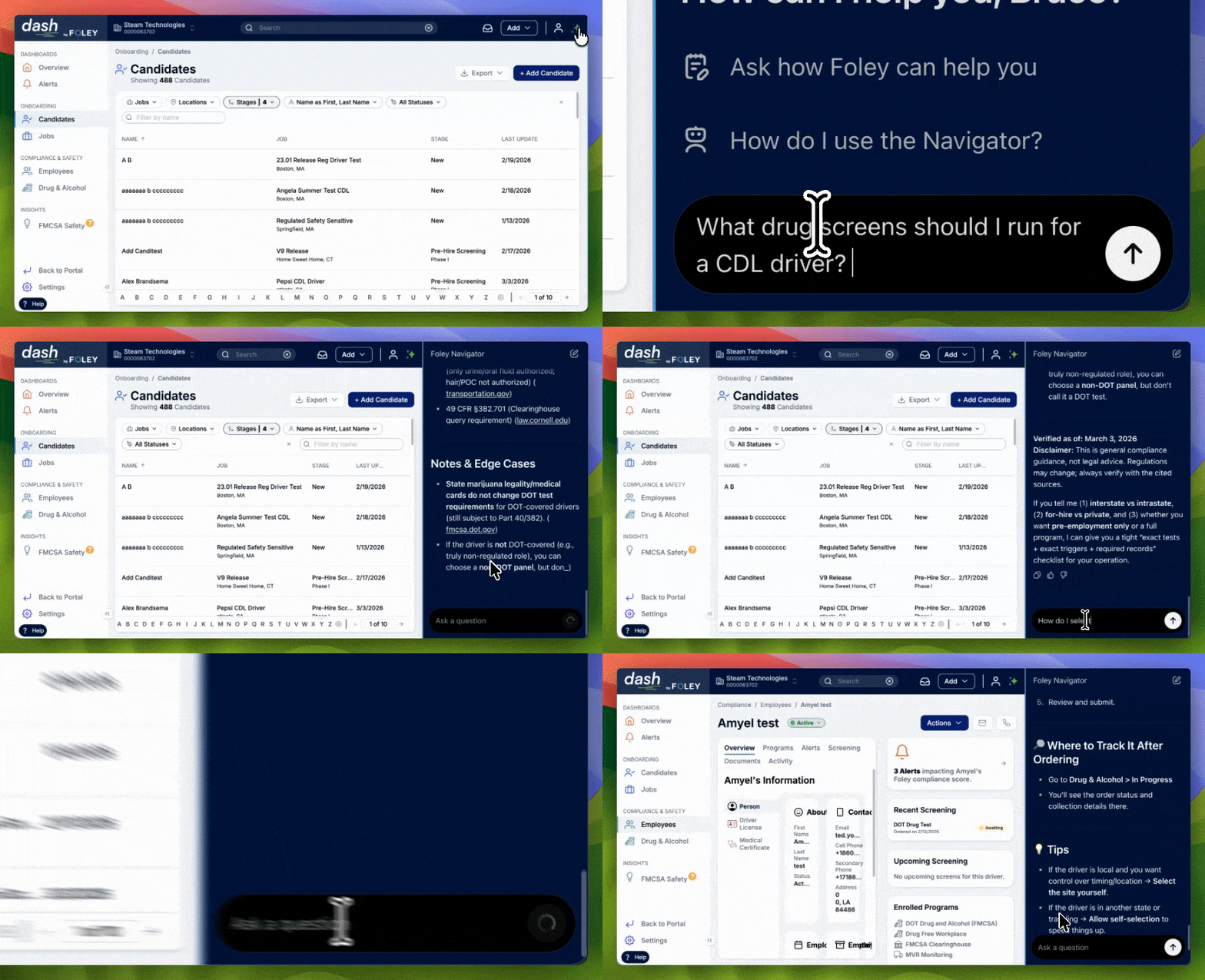
Foley supports this process across the full driver lifecycle with Dash, its all-in-one compliance platform. From pre-employment screening and onboarding to the ongoing management of driver files, Dash helps carriers document that the required steps were completed, monitored, and updated over time.
Specifically, Dash supports employer diligence by helping carriers:
- Centralize driver qualification files in a secure, digital system
- Track required pre-employment and onboarding steps
- Monitor ongoing compliance requirements, such as medical certification status and license changes
- Support drug and alcohol testing program management, including random testing requirements
- Conduct and document required Clearinghouse and motor vehicle record (MVR) queries
- Receive automated alerts when action is needed, reducing the risk of missed or expired requirements
Automated workflows and alerts reduce reliance on manual processes, while centralized records make it easier for carriers to demonstrate that they applied hiring and oversight practices consistently across the organization.
This kind of infrastructure doesn’t prevent accidents, and it doesn’t eliminate legal exposure. But it does help carriers show that they didn’t make hiring decisions in isolation or overlook compliance due to administrative gaps. Having a system that supports diligence and documentation can make a meaningful difference during litigation.
Bottom Line: Focus on What You Can Control in a High-Stakes Litigation Environment
Remember, no compliance system can eliminate risk of nuclear verdicts entirely. Accidents happen, and even qualified drivers can make costly mistakes.
But when a serious crash leads to litigation, juries will also judge employers on the decisions they made when hiring drivers. Did the carrier cut corners? Did the carrier keep records that back up their claims?
Driver qualification files play a critical role in this evaluation, and Foley can help make sures yours can stand up to scrutiny. Take the next step by requesting a demo of Dash today.
Related Articles
3 Reasons Paper DOT Driver Qualification Files Aren't Cutting It Anymore
Mastering DOT Driver Qualification Files (DQFs): Compliance, Requirements & Best Practices
How to Use DOT Compliance Programs to Lower Your Commercial Insurance Costs
.webp)