









As a major winter storm impacts large parts of the U.S., truck drivers are navigating icy roads, reduced visibility, delays, and disrupted freight routes. These conditions put added pressure on drivers and fleets and increase the likelihood of inspections, incidents, and documentation challenges, as widespread winter weather continues to disrupt U.S. transportation networks.
For fleets, winter storms don’t just affect day-to-day operations. They create moments where fleet risk becomes highly visible and the data generated during these periods often shows up later in insurance underwriting and renewal decisions.
Winter weather doesn’t pause CSA scores or compliance
Severe weather doesn’t come with exceptions in the data. During winter storms:
-
Roadside inspections often increase
-
Violations still impact CSA scores
-
Incidents are more likely to result in claims
-
Driver files and documentation are tested under pressure
CSA scores don’t pause for winter conditions. Clearinghouse compliance doesn’t pause. MVR monitoring doesn’t pause. Even when drivers are navigating difficult conditions, insurers continue to rely on these metrics to evaluate fleet risk.
How winter storms factor into insurance decisions
Insurance markets remain tight heading into 2026, and underwriters are more focused on real-time risk indicators than ever. After high-risk periods like winter storms, carriers often take a closer look at:
-
CSA score trends, especially unsafe driving and hours-of-service
-
Clearinghouse compliance and Part 382 enforcement
-
MVR monitoring practices
-
The completeness and quality of driver documentation
When weather events hit, insurers aren’t focused on the storm itself. Instead, they’re focused on what the data shows about driver oversight, compliance consistency, and operational control.
Winter storms reveal risk, they don’t create it
Extreme weather doesn’t introduce new behavior. It exposes existing patterns.
Fleets with consistent compliance processes, strong driver oversight, and clean documentation are better positioned in insurance conversations. Fleets without that visibility may find themselves explaining data gaps months later, when premiums, capacity, and terms are already being set.
Why this matters heading into 2026 renewals
As fleets prepare for upcoming insurance renewals, the conversation has shifted. Insurers are no longer asking only what happened last year. They’re asking what your CSA scores, compliance data, and driver oversight practices say about risk right now.
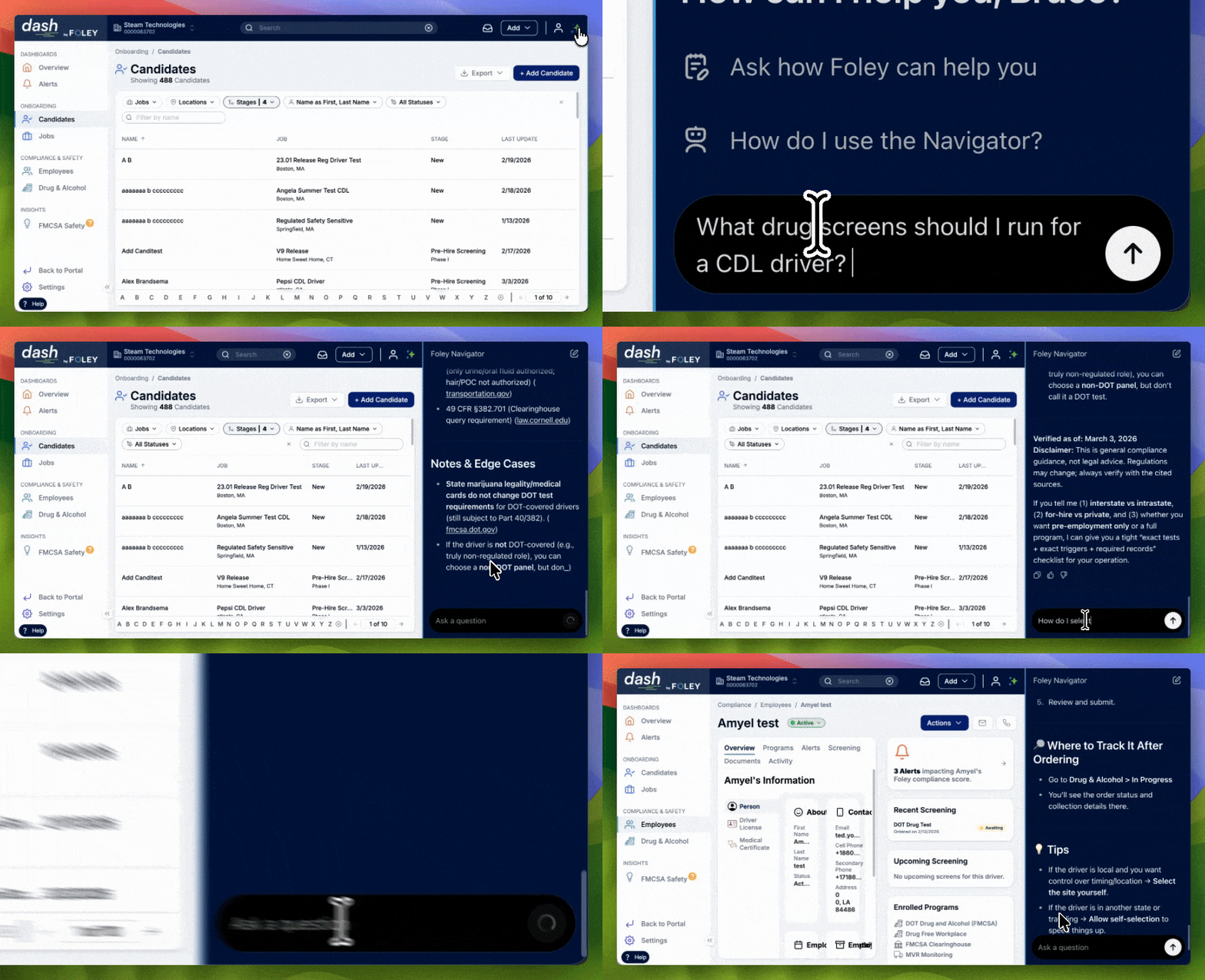
That shift is the focus of a live, educational webinar hosted by Foley and McGriff on Thursday, January 29, covering how compliance performance and operational data are shaping trucking insurance outcomes heading into 2026.
Join the live webinar (and bring your questions!)
Transportation insurance advisor Mike Hulsey of McGriff and Mary Martin of Foley will break down:
-
How insurers interpret CSA scores today
-
Why Clearinghouse compliance and MVR monitoring matter more than ever
-
How documentation quality affects underwriting confidence
-
What fleets can realistically improve before renewal
👉 Register for the live webinar on January 29 to get clarity on what insurers are watching and where fleets still have leverage.
As you read through, you'll see quite a few acronyms that are frequently used in the DOT compliance industry. Get the definition of the most popular terms and acronyms in this Foley article: 50 Trucking & Transportation Terms You Need to Know.
What companies and drivers are regulated by the FMCSA?
No matter the type or size of your company, if you have a DOT number, you need to follow the Federal Motor Carrier Safety Regulations (FMCSRs).
In addition to having a DOT number, your company is federally regulated if it meets even one of the following descriptions:
Owns or leases at least one commercial motor vehicle (CMV) with a gross vehicle weight rating (GVWR) or gross combination weight rating (GCWR) of 10,001 pounds or more
Owns or leases any vehicle designed or used to transport between 9 and 15 passengers (including the driver) for compensation, whether direct or indirect
Owns or leases any vehicle designed or used to transport 15 or more passengers including the driver and not used for compensation
Hauls hazardous materials (hazmat), and requires placarding, for either interstate (crossing state lines) or intrastate (within one state) commerce
Your drivers must have specific commercial driver's licenses (CDLs) to operate the above vehicles. We explain the different types of CDLs and endorsements your drivers can/should have, plus what any restrictions on their CDLs may mean in this Foley article.
Do I need a DOT-compliant job application?
In short, yes. The applicant must sign and date the application, and you must provide a Summary of Rights to any applicant, since the information included on the application will be used in the required background screening process. The Summary of Rights informs candidates that they can review and dispute any information about them provided by previous employers.

Everything your job application needs to include is covered in this Foley article: 10 Steps to a DOT-Compliant Application.
Foley's driver-first digital application is designed with busy CDL drivers in mind, and it can be completed from any mobile device. We highly recommend making the application process quick and easy to give drivers the best first impression of your company (and to make your job easier!)
What background checks do I need to run on my drivers?
Not only should you run background checks on new drivers to ensure you're making a good hiring decision, but you must also do so to comply with FMCSRs.
Here are the checks you must perform on every prospective driver:
Motor vehicle record (MVR) check
Safety Performance History
Pre-employment drug test
Medical examiner's certificate verification
Road test and CDL-certified
We explain what each of these checks involves in this helpful Foley article: Understanding Your DOT-Required Background Checks
It's important to note the changes to the drivers' Safety Performance History as well. As of January 6, 2023, you need to check the FMCSA Drug and Alcohol Clearinghouse for drivers' drug and alcohol violations as part of the pre-employment process; however, you will still need to reach out to previous employers for moving violation information.
When do my drivers need a DOT physical?
DOT physicals generally must be done every 24 months, but the specific "expiration" date of any driver's previous physical will be noted on their medical certificate. Some medical examiners may wish to check drivers more frequently to monitor certain health conditions, such as high blood pressure.

Your company may also opt to perform DOT physicals as part of the pre-employment process to ensure the driver is considered healthy enough to successfully fulfill the job requirements.
When do my drivers need to take a drug test?
There are six specific occasions when a driver needs to take a DOT drug test. Below are the types of tests and what is involved with each one.
Pre-employment - You must receive a negative drug test result before any new driver begins operating a CMV. Answers to pre-employment drug screen questions can be found here.
Post-accident - You may be required to order a drug and alcohol test on a driver after they are involved in an accident while on-duty.
Random - All CDL drivers must be enrolled in a random drug testing consortium and be randomly tested throughout the year.
Reasonable suspicion - If any driver appears to be under the influence of drugs or alcohol, you have a right to order a test for them.
Return-to-duty - Any driver who tested positive for drugs or alcohol, refused to test, or violated any regulation regarding substance use and has completed the return-to-duty (RTD) process must produce a negative test result before returning to safety-sensitive duties.
Follow-up - After the RTD process is completed by a driver, they must complete at least six follow-up tests during a 12-month period, but it can be extended up to an additional four years.
You don't have to navigate all these tests on your own. Foley's drug and alcohol testing program makes everything from ordering tests to receiving results quick and painless.
What does a DOT-compliant drug and alcohol testing policy include?
Your company should already have a drug and alcohol policy in place, but it should include additional information that relates to your safety-sensitive employees.
As a best practice, include the above drug and alcohol tests and their descriptions so employees know under which circumstances they may be selected for screenings.
This FMCSA checklist should be used to help develop a policy that checks all the boxes with your compliance requirements, specifically section two.
What's the best way to manage DOT compliance? Automation.
Now that you know what these DOT compliance matters involve, you might feel a little better about keeping your company compliant.
But you may also feel overwhelmed.
Don't worry! Foley helps professionals like you get the compliance solutions they need every day to make their jobs easier, so they can focus on other important business matters (like their day-to-day job duties). Our automated DOT compliance software ensures you're always following FMCSRs.
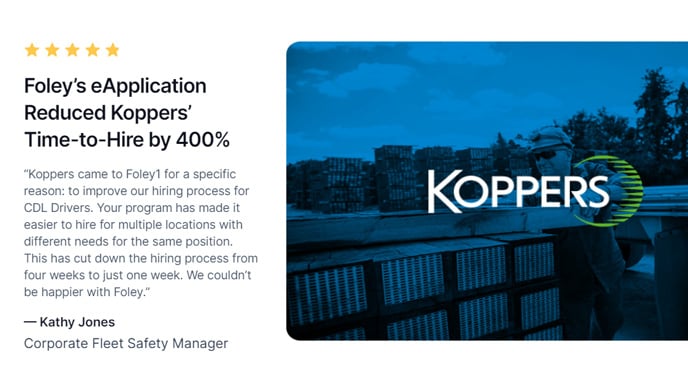
You don't have to just take our word for it, either. See why the Compliance Manager at Torc, an autonomous transportation innovator, said this:
I appreciate the effort from the Foley team. It has made my life a whole lot simpler. My mantra is always ARE: Audit Ready Everyday.
Ready to leave DOT compliance stress behind and be audit-ready every day? Fill out the form below and get started with a free software demo now.
.webp)