


CVSA Adds FMCSA Clearinghouse Queries to Roadcheck Inspections
Are your drivers prohibited in the FMCSA Drug and Alcohol Clearinghouse?
Violations in the FMCSA Drug & Alcohol Clearinghouse
Since the FMCSA Clearinghouse went into effect in 2020, employers of CDL drivers have been required to report DOT drug and alcohol testing violations to the database. These include failed drug or alcohol tests, refusals to test, and other violations tied directly to federally mandated testing programs.
It’s important to note what the Clearinghouse does not include: it does not track general traffic violations or DUI offenses. Instead, it focuses solely on violations uncovered through DOT-regulated testing.
When a violation is reported, the driver is placed in a “prohibited” status and cannot perform safety-sensitive functions, including operating a commercial motor vehicle, until they complete the return-to-duty (RTD) process.
Recent updates under the Clearinghouse-II rule have strengthened how these violations are enforced. Drivers listed as “prohibited” can no longer maintain active commercial driving privileges. State licensing agencies are now required to downgrade or deny a CDL or CLP until the RTD process is complete.
For employers, this means Clearinghouse violations now carry immediate licensing consequences, not just hiring or qualification risks. If a driver has an unresolved violation, they may already be ineligible to operate, regardless of whether the employer has identified the issue—something that can quickly surface during a Roadcheck inspection.
Closing the Safety Gap Between Clearinghouse Queries and Roadside Inspections
While the FMCSA Clearinghouse provides critical visibility into drug and alcohol testing violations, it doesn’t offer real-time insight by default.
Employers are only required to run Clearinghouse queries on drivers annually. That means a driver could commit a violation shortly after a query is completed and remain in a “prohibited” status without the employer’s knowledge for months.
That gap becomes especially risky during events like International Roadcheck, where inspectors are checking Clearinghouse statuses in real time. A violation that went undetected internally, such as a failed drug test reported by another employer, can still be identified instantly at the roadside, leading to out-of-service orders, operational disruptions, and delayed shipments.
To close this gap, employers need more frequent visibility into driver risk. Running compliant Clearinghouse queries on an ongoing basis is one step, but it’s only part of the picture.
Because the Clearinghouse is limited to drug and alcohol testing violations, it should be paired with motor vehicle record (MVR) monitoring. MVR monitoring provides real-time alerts for license status changes, traffic violations, and DUIs, giving employers a more complete view of driver qualification and risk.
Together, Clearinghouse compliance and MVR monitoring help ensure that drivers are not only eligible on paper, but safe and qualified to be on the road, especially during high-visibility enforcement events like Roadcheck.
Close the Compliance Gap with Dash
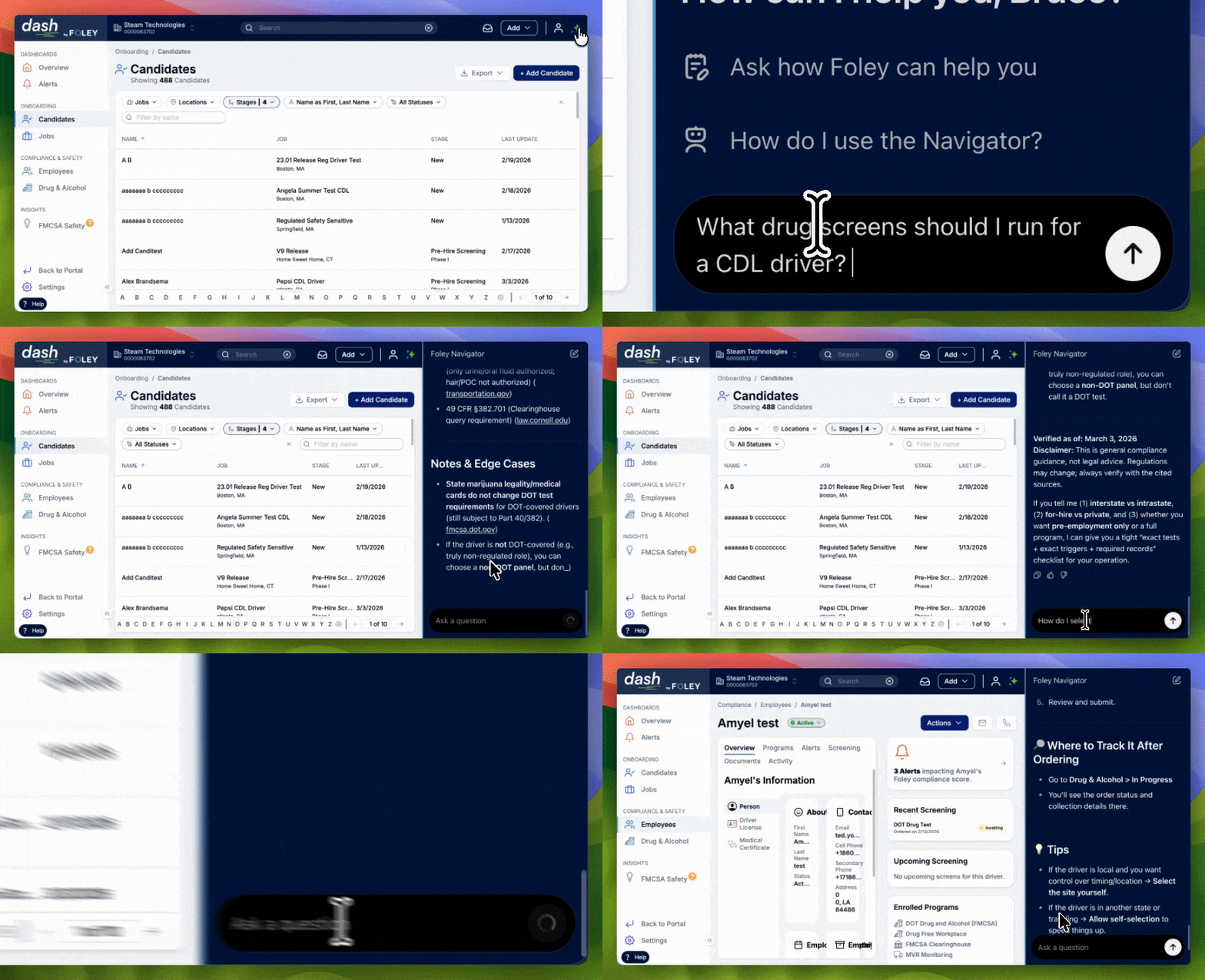
Foley’s all-in-one compliance platform, Dash, helps close this visibility gap by bringing Clearinghouse queries and MVR monitoring together in one place.
With automated alerts and ongoing monitoring, you can stay ahead of violations, reduce risk, and keep your drivers qualified not just during Roadcheck, but year-round. Schedule a demo of Dash by clicking here , or fill out the form below.
Related Articles
May 2025: What's New in Safety & DOT Compliance
The 2025 CVSA International Roadcheck Starts Next Week
May 2021 Roadcheck Dates Announced