








Preparing for the 2026 CVSA Roadcheck: Overview of Requirements
What can you expect during this year's CVSA International Roadcheck?
It’s nearly time again for the Commercial Vehicle Safety Alliance (CVSA) annual International Roadcheck. The 72-hour enforcement event is set to take place from Tuesday, May 12 through Thursday, May 14, 2025.
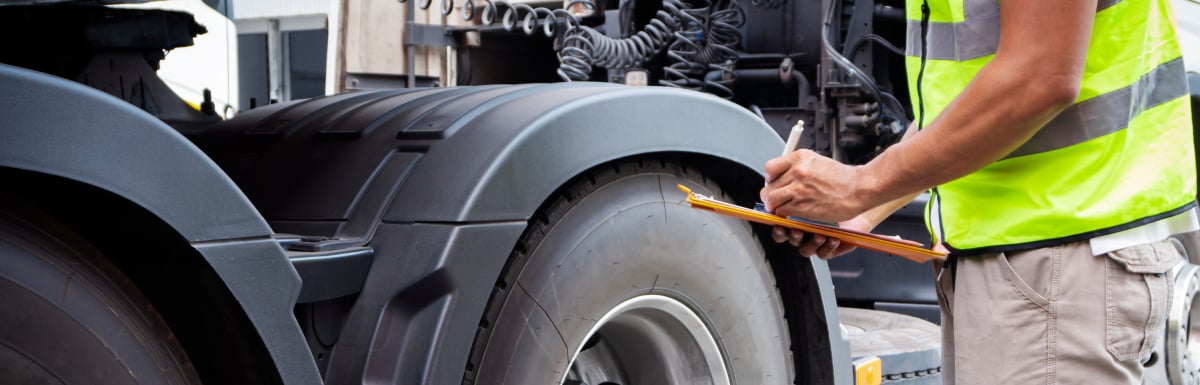
If you’ve been in business during a previous Roadcheck event, you know how it works: For 72 hours, inspectors across North America request commercial motor vehicles to pull over for on-the-spot inspections meant to ensure driver and truck safety.
Each year, the CVSA highlights a particular focus. In 2025, the focus areas were on tires and false records-of-duty status. This year, the focus is on cargo securement and ELD tampering, falsification, and manipulation.
Below, we discuss:
-
How trucks are selected for CVSA Roadcheck
-
Results from last year's CVSA Roadcheck and how they explain the focus areas for 2026
-
Three areas that are always on inspectors' radars: DOT medical certificates, CDL violations, and Clearinghouse compliance
-
The best defense for enforcement season (hint: using the right software and working with the right partner)
You can learn more about the 2026 focus areas in our FREE guide. Click here to download it!
How Trucks Are Selected for CVSA Roadcheck
During the CVSA International Roadcheck, there isn’t a narrow selection process that limits who gets inspected. For 72 hours, enforcement personnel across North America conduct high-volume, high-visibility inspections , meaning any commercial motor vehicle operating on the road can be pulled in for inspection.
Inspectors evaluate both vehicle condition and driver compliance, including equipment, documentation, and overall safety readiness. If critical violations are found, the vehicle or driver may be placed out of service until the issue is corrected.
Those who successfully pass inspections will receive a CVSA decal to display on their trucks, which will be valid for three months. Generally, vehicles displaying a valid CVSA decal will not be subject to additional inspections for that period.
Results from Last Year's CVSA Roadcheck and How They Help Explain the Focus Areas for 2026
If you want to understand what inspectors will be focused on during the 2026 CVSA Roadcheck, it helps to look at what they found last year.
According to CVSA, inspectors conducted 56,178 inspections during the 2025 International Roadcheck . During that 72-hour enforcement event, they identified 13,553 vehicle out-of-service violations and 3,317 driver out-of-service violations, placing 10,148 vehicles and 3,342 drivers out of service.
On the vehicle side, the top out-of-service violations in North America were:
-
Brake systems (3,304)
-
Tires (2,899)
-
20% defective brakes (2,257)
-
Lights (1,737)
-
Cargo securement (1,549)
On the driver side, the top out-of-service violations for the U.S. and Canada combined:
-
Hours of service (1,076)
-
No CDL (810)
-
No medical card (493)
-
False logs (332)
-
Suspended driver’s license/CDL (170)
Those results reinforce an important point for fleets: While the annual focus areas may change, the most common violations often do not. In 2025, tire violations were a major enforcement priority, and false records-of-duty status were the driver-focused area. For 2026, CVSA has shifted its spotlight to cargo securement and ELD tampering and falsification.
That shift makes sense. Cargo securement already ranked among the top five vehicle out-of-service violations in 2025, and false logs were already among the top five driver out-of-service violations. In other words, CVSA isn’t inventing new concerns for 2026. Instead, it’s putting more attention on compliance problems inspectors are already finding on the road.Three Areas That Are Always On Inspectors' Radars
Inspectors will also closely analyze driver operating credentials and requirements, such as whether they have a valid CDL, an up-to-date medical certificate, or violations in the FMCSA Drug & Alcohol Clearinghouse . Here's what you need to know.
Ensure DOT Medical Certificate Compliance
For the past few years, some of the most common violations during roadside inspections have involved invalid or expired medical cards.
Per federal law, all interstate drivers operating a vehicle weighing 10,001 pounds or more must have a current medical card. These generally must be updated every two years. Depending on a driver’s health condition, updates are sometimes required more often, which can lead to lapses in renewals, resulting in violations.
The best way to maintain compliance is to ensure that all medical cards are valid and that drivers with cards due to expire are scheduled for DOT physicals. Just as importantly, audit your driver files regularly to ensure you and each driver you employ has a valid medical card.
You can easily manage this process with automated compliance software that tracks medical card expiration dates and any missing driver files.
Be Aware of Potential CDL Violations
Other all-too-common driver violations have to do with CDL licenses. For example, drivers have been caught operating with the wrong license class, with suspended, expired, or revoked CDLs, or with multiple CDLs.
To identify drivers’ CDL statuses, be sure to include a check of the Commercial Driver’s License Information System (CDLIS) as part of pre-employment screening. This will identify every state which a driver has held (or holds) a CDL. It’s also important to keep track of CDL expiration dates with an automated driver file management system.
Also, be sure to enroll all current drivers in an MVR monitoring program. This will provide immediate notifications of a license suspension or revocation, as well as DUIs, accidents, speeding tickets, or other moving violations.
Get Ahead of FMCSA Clearinghouse Compliance Checks
Ahead of this year's Roadcheck, it's important to remember that the CVSA will continue to include FMCSA Clearinghouse queries to their roadside inspection list for CDL and CLP drivers. If a driver is pulled over during Roadcheck, inspectors will be looking to verify that the driver doesn’t have any violations in the DOT Clearinghouse that would prohibit them from operating a commercial motor vehicle.
If a violation is found, the driver will be pulled from safety-sensitive functions immediately, any cargo they're hauling will be stranded until a relief driver can be assigned to complete the run.
Not to mention, you could be at risk of paying $5,833 per Clearinghouse violation the inspector finds you committing. This can be a hefty fine for any company, much less a new entrant or small-to-medium-sized company.
To prepare for potential FMCSA Clearinghouse checks during this year's Roadcheck, you should run limited Clearinghouse queries on your drivers ASAP to see if they have any violations in their records. If a limited query reveals there are any violations, you must run a full query within 24 hours.
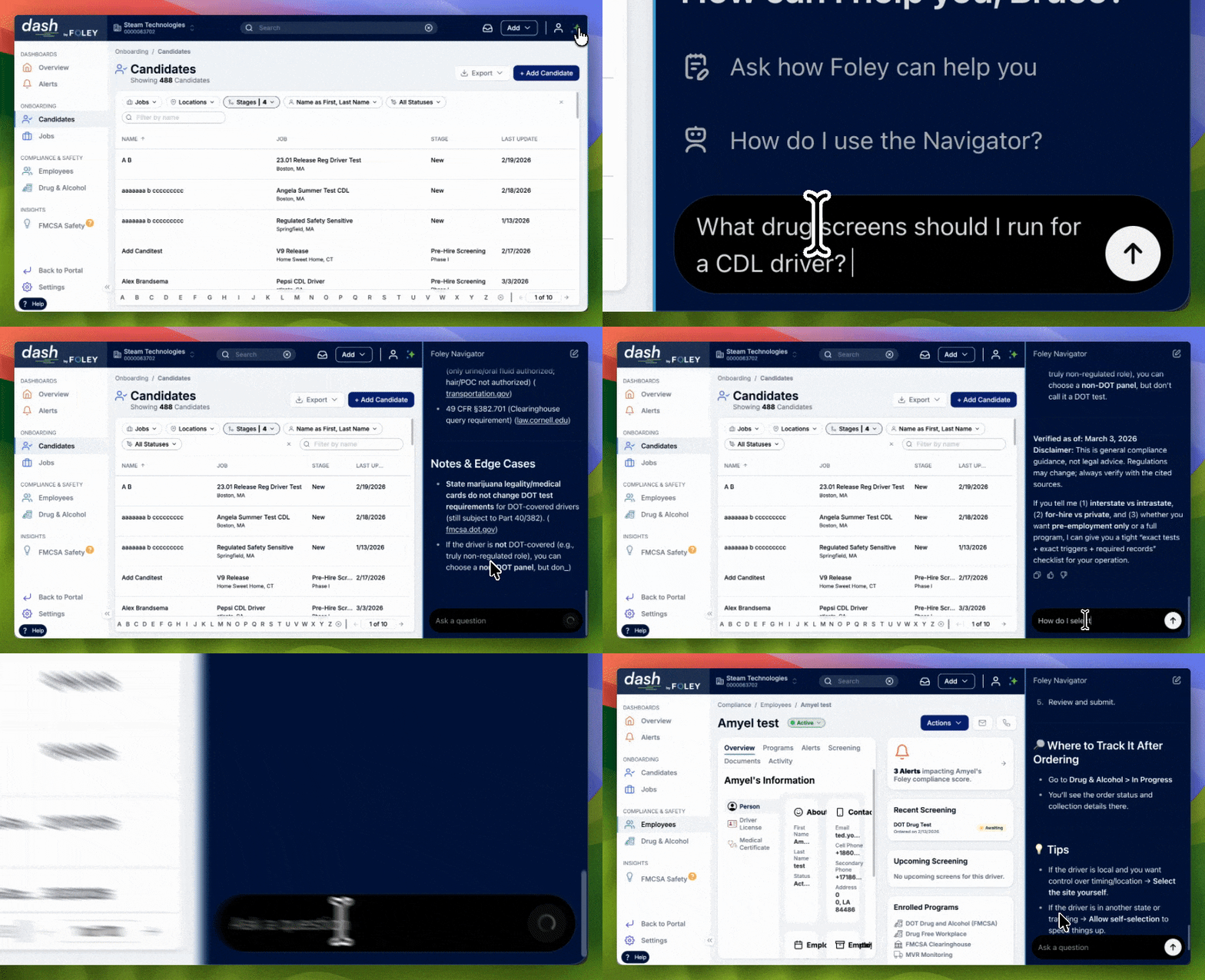
FMCSA Clearinghouse compliance is easier when a third-party administrator manages your registration and query requirements for you. Foley's automated Clearinghouse compliance software runs pre-employment, annual, and additional driver queries on your behalf to ensure any violations are caught before you're issued an out-of-service order during Roadcheck or a future random roadside inspection.
Get Roadcheck-Ready with Foley
Since the 2026 CVSA Roadcheck blitz is less than one month away, now is the time to prepare and ensure your vehicles and drivers are violation-free and operating compliantly.
Need some help? Take our quiz to find out if you’re Roadcheck ready. And if you have any questions about DOT compliance or would like help running FMCSA Clearinghouse queries before this year's event, request a free demo from our compliance experts. You can click the link or fill out the form below.
Bottom line: Foley's all-in-one compliance software solution automates your compliance programs so you never have to second-guess if you're prepared for federal safety interventions, like CVSA Roadcheck.
Related Articles
February 2024 Significant FMCSA Rulemaking Report
CVSA Adds FMCSA Clearinghouse Queries to Roadcheck Inspections
3 Types of FMCSA Safety Investigations & How to Prepare for Them
.webp)