









ELD Exemptions Explained: Which Vehicles Are Exempt from the ELD Mandate
Picture this: You're operating a fleet with 23 city delivery drivers. They're all local and home every night. Your safety director assumes they're all short-haul exempt — no ELD needed, and they operate with timecards only. No one tracks exception days. You have a busy month, and a few drivers push outside the 150-mile radius on nine calendar days. Now, you've pushed past the exemption allowance, and yet no one noticed. Then, a driver is pulled into a roadside inspection, they can't produce ELD data when requested, and they're placed out of service.
This is a realistic scenario that happens often. That's why learning the FMCSA's ELD exemptions are worth knowing precisely.
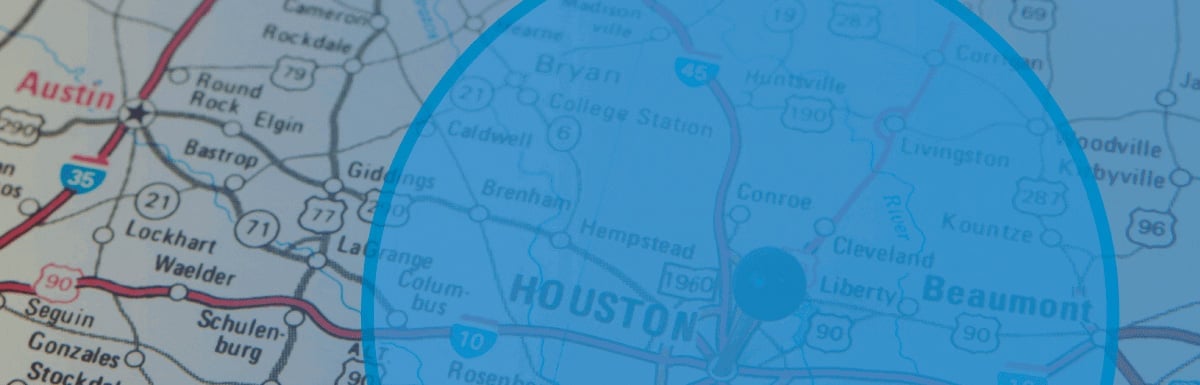
Short-haul exemption: 150 air-mile radius (CDL drivers)
This covers most local and regional delivery operations under §395.1(e)(1). Three conditions, and all three are required every single day:
- Stay within 150 air miles of your normal work location
- Return to that location and be released within 14 hours of coming on duty
- Drive no more than 11 hours
Miss any of these on any given day and that day counts toward the eight calendar exception days.
Non-CDL short-haul: 100 air-mile radius
There is a separate exemption under §395.1(e)(2) for non-CDL CMV drivers with a tighter radius and shorter day allowance:
| Exemption | Radius | Return window | Max driving time | Who qualifies |
|---|---|---|---|---|
| CDL short-haul §395.1(e)(1) | 150 air miles | 14 hours | 11 hours | CDL drivers, local operations |
| Non-CDL short-haul §395.1(e)(2) | 100 air miles | 12 hours | 11 hours | Non-CDL CMV drivers, local delivery |
Note the direction: the CDL exemption is the wider one. Older guidance — including material published before the 2020 hours-of-service revision — has these two figures the other way around. The 2020 rule widened the CDL short-haul radius from 100 to 150 air miles and the duty window from 12 to 14 hours. If a source gives CDL drivers 100 miles and 12 hours, it is out of date.
The eight-day/30-day rule
You are allowed eight exception days to these short-haul regulations in any rolling 30-day period. The 30 days roll continuously — there is no calendar reset on the first of the month. Track this per driver, not per fleet.
On any exception day the driver is required to keep paper RODS for that day. Track the days as they happen rather than discovering the count at month end.
“The 8-day rule catches fleets constantly. A dispatcher sends a driver outside the 150-mile radius a few extra times in a busy month, and suddenly that driver needs an ELD they do not have. Track every exception day, do not wait until the 8th one to start paying attention.”
Pre-2000 engine model year
Older engines lack the ECM interface an ELD needs to sync. The truck's build date is irrelevant — it is the engine's model year that governs. A 2006 truck with a 1999 engine is still exempt.
HOS rules still apply. Paper RODS are required if the driver is subject to Part 395.
If you are keeping pre-2000 engines because ELD costs do not pencil out, factor that into any fleet upgrade decision.
Driveaway-towaway exemption
Under 49 CFR §395.1(e)(3), driveaway-towaway operations are exempt. There are three configurations:
- Driveaway — driving a vehicle from the manufacturer or dealer to a delivery point, where the vehicle itself is the cargo
- Towaway — towing a vehicle as cargo using a saddle mount, full mount, or towbar
- Transportaway — transporting vehicles on a trailer or transport device
Transporting a motor home or an RV trailer with one or more sets of wheels on the roadway also falls under this exemption.
HOS rules still apply and paper RODS are still required.
One thing that confuses carriers: if you carry freight in addition to transporting a vehicle, only the vehicle-transport portion is exempt. If you are unsure whether a load qualifies, assume it does not to be on the safe side.
Agricultural exemption
Under 49 CFR §395.1(k), drivers transporting agricultural commodities — including livestock — from the source to the first point of processing or storage, or farm supplies from distribution to the farm, may qualify.
Two conditions must be met at the same time:
| Condition | Requirement |
|---|---|
| Radius | Within 150 air miles of the source |
| Season | During the state-defined planting and harvesting season |
Outside the season or beyond 150 miles, standard ELD requirements apply immediately.
Every state sets its own planting and harvesting dates, so a multi-state ag operation is managing several seasonal windows at once. This is the exemption that confuses carriers in this industry most, and it's likely the first one an auditor will challenge.
Other exemptions worth knowing
Utility service vehicles under 49 CFR §395.1(n) — construction, operation and maintenance of power lines, water systems and pipelines.
Tow trucks responding to emergencies. Some states have their own provisions; there is no blanket federal exemption. Verify your state's rules before assuming coverage.
FMCSA emergency waivers. Issued during declared emergencies including natural disasters, supply disruptions and fuel crises. They carry hard expiry dates and specific scope limitations. Read them carefully before assuming you're covered.
What happens when you claim the wrong exemption
If an inspector requests ELD data from a driver during a roadside inspection and the driver believes they are exempt, they will still need to provide documentation proving they qualify for a specific exemption.
Timecards for short-haul, engine paperwork for pre-2000, and appropriate records for driveaway operations can be requested during a roadside inspection. If your driver fails to provide them, an out-of-service order will likely be the result.
For enforcement detail, see ELD violations: fines, process and prevention.
Managing a mixed fleet
Some fleets may have some drivers on ELDs, some on paper logs, and some on timecards. Keeping track of who falls under which rules is the real compliance work.
Classify every driver at hire and document which exemption applies, in writing. Track short-haul exception days in real time, not at month end when it is too late to act. Audit quarterly to catch drivers whose routes have changed or who have moved onto different equipment. Keep all records in one place — an auditor will notice if everything accessible during the review, regardless of whether the driver is on an ELD or a timecard.
Frequently asked questions
Are short-haul drivers exempt from the ELD mandate? Yes, if they meet all three criteria under 49 CFR 395.1(e)(1): operate within a 150 air-mile radius, return to the reporting location within 14 hours, and do not exceed 11 hours of driving time. If a driver exceeds any of these limits more than 8 days in any 30-day rolling period, the exemption is lost.
Do trucks with older engines need an ELD? No. Vehicles with an engine manufactured before model year 2000 are exempt from the ELD mandate, because older engines lack the electronic control module (ECM) interface required for ELD connectivity. Drivers of these vehicles must still maintain paper RODS if subject to HOS rules.
What is the 8-day/30-day rule for ELD exemptions? A short-haul driver who exceeds the 150 air-mile radius, the 14-hour return window or the 11-hour driving limit on more than 8 days in any rolling 30-day period loses the ELD exemption. On the 9th exception day an ELD is required immediately.
Are agricultural haulers exempt from ELD requirements? Only when transporting agricultural commodities or farm supplies within a 150 air-mile radius during state-defined planting and harvesting seasons. Outside those seasons or beyond that radius, standard ELD requirements apply.
Do driveaway-towaway drivers need an ELD? No. Driveaway-towaway operations, where the vehicle being delivered is the commodity being transported, are exempt. These drivers must still keep paper RODS if subject to HOS rules.
Related Articles
FMCSA Clarifies Ag Hauler HOS Exemption
Understanding the 16-Hour Short Haul Exemption
FMCSA Hours of Service: The 100/150 Air Mile Exemptions
.webp)