










What Is a CSA Score? Complete Guide to FMCSA's Safety Measurement System
Carriers don't realize their CSA score is tanking until a warning letter shows up or their insurance renewal comes back 30% higher. By then, the damage has been building for months.
Your CSA score is FMCSA's percentile-based safety rating, calculated from roadside inspections, crash data, and compliance investigations. Scores range from 0 to 100 across seven BASIC categories. Higher is worse. Cross the wrong threshold and you're looking at warning letters, compliance reviews, and operational restrictions. Insurance underwriters pull these numbers too, and they use them to set your premiums. And they don't call to give you a heads up first.
How the system works, what the thresholds are, and what you can do about it before someone else notices.
The 7 BASIC Categories
FMCSA evaluates every motor carrier across seven BASICs. Each one gets scored independently based on the number and severity of violations found during roadside inspections, crash reports, and investigations.
| BASIC Category | What It Measures | Key Violation Examples | Intervention Threshold |
|---|---|---|---|
| Unsafe Driving | Moving violations observed during inspections | Speeding, reckless driving, improper lane change, texting while driving | 65th percentile |
| Crash Indicator | History of state-reported crashes | DOT-reportable crashes involving fatality, injury, or towed vehicle | 60th percentile |
| Hours-of-Service Compliance | HOS violations identified through inspections and related enforcement data | Exceeding drive time, falsifying logs, operating without an ELD | 65th percentile |
| Vehicle Maintenance | Equipment violations from inspections | Brake defects, tire condition, lighting, cargo securement | 80th percentile |
| Controlled Substances/Alcohol | Drug and alcohol program violations | Positive test results, refusals, no testing program, CDL disqualification | 80th percentile |
| Hazardous Materials Compliance | HM regulation violations | Improper placarding, shipping paper errors, packaging failures | 60th percentile |
| Driver Fitness | Driver qualification and licensing violations | Invalid CDL, missing medical certificate, unqualified driver | 80th percentile |
Thresholds aren't the same across all BASICs. Unsafe Driving and HOS trigger at the 65th percentile. Crash Indicator and Hazardous Materials trigger at the 60th. Vehicle Maintenance, Controlled Substances, and Driver Fitness trigger at the 80th. Plenty of fleet managers assume the number is uniform. It's not.
How CSA Scores Are Calculated
The SMS calculates each BASIC percentile through several steps:
Step 1: Data Collection
FMCSA pulls data from three sources: - Violation data from state and federal roadside inspections - State-reported crashes: DOT-reportable crashes filed by law enforcement - Findings from FMCSA compliance reviews and investigations
Step 2: Violation Severity Weighting
Every violation gets a severity weight from 1 (minor) to 10 (most severe). Because FMCSA weights these differently, one bad violation can outweigh a dozen minor ones:
| Violation | Severity Weight |
|---|---|
| No fire extinguisher | 1 |
| Tire tread depth violation | 3 |
| Inoperative brakes | 8 |
| Operating while CDL is disqualified | 10 |
| Positive drug test (controlled substances) | 10 |
Step 3: Time Weighting
Violations are also weighted by recency. This part matters more than most people realize:
| Time Period | Weight Multiplier |
|---|---|
| Most recent 6 months | 3x |
| 6–12 months ago | 2x |
| 12–24 months ago | 1x |
| Older than 24 months | Drops off entirely |
A clean 6-month stretch will significantly improve your percentile. Recent violations hit your score hard, but the clock works in your favor as long as you keep things clean going forward.
Step 4: Peer Group Percentile
After calculating your raw BASIC score, FMCSA ranks you against peer carriers of similar size (measured by number of inspections, power units, or relevant segment). Your percentile shows what percentage of similar carriers you scored worse than.
A percentile of 80 means you've got more or worse violations than 80% of your peers. That's bad. A percentile of 20 means you're outperforming 80% of peers, which is where you want to be.
“Fleet managers often misread CSA percentiles as grades, thinking 80 is a good score. It's the opposite. In the SMS system, higher is worse. An 80th percentile means you're in the bottom 20% of your peer group.”
FMCSA Intervention Process
FMCSA doesn't jump straight to an audit when you exceed a threshold. Enforcement escalates through a progressive process:
Warning Letter
The first step for most carriers. FMCSA sends a letter identifying which BASICs are above threshold and what violations are driving the score. No penalties at this stage. But the letter signals that further enforcement is coming if you don't act.
Targeted Investigation
If your scores stay elevated, FMCSA may conduct an off-site or on-site investigation focused on the specific BASICs above threshold. This isn't a full compliance review. It's a focused examination, and nobody wants to be on the receiving end of it.
Compliance Review (On-Site Audit)
This is the full-scope on-site audit of your safety management systems, records, and operations. Auditors will go through everything from your drug and alcohol testing program to driver qualification files, HOS records, and vehicle maintenance systems.
Proposed Safety Rating Downgrade
In severe cases, FMCSA may propose changing your safety rating to Conditional or Unsatisfactory. An Unsatisfactory rating can result in an out-of-service order, effectively shutting down your operations.
| Intervention Level | Trigger | Consequence |
|---|---|---|
| Warning letter | BASIC above threshold | Notification only |
| Targeted investigation | Persistent elevation | Focused examination of specific areas |
| Compliance review | High priority score | On-site audit of all compliance areas |
| Safety rating downgrade | Severe findings | Conditional or Unsatisfactory rating |
| Out-of-service order | Imminent hazard or Unsatisfactory rating | Operations suspended |
CSA Scores and Insurance
Insurance underwriters have full access to your SMS data through FMCSA's public website. Underwriters pull your SMS data and factor it directly into pricing decisions.
Premium Impact
Carriers with elevated BASICs (particularly Unsafe Driving, Crash Indicator, and Vehicle Maintenance) face:
- Premium increases of 10–30% for scores approaching intervention thresholds
- 30–50%+ increases when you're above intervention thresholds
- Flat-out non-renewal or declination if you've got multiple BASICs above threshold
Which BASICs Matter Most to Insurers
| BASIC | Insurance Impact |
|---|---|
| Unsafe Driving | Highest, directly predicts crash probability |
| Crash Indicator | High, historical crash record |
| Vehicle Maintenance | High, brake and tire failures are leading crash causes |
| HOS Compliance | Moderate, fatigue-related crash risk |
| Controlled Substances/Alcohol | High, impairment-related risk |
| Driver Fitness | Moderate, qualification gaps |
| Hazardous Materials | Moderate (HM carriers only) |
Insurers have automated underwriting rules that decline any carrier with specific BASICs above threshold. Your broker may not even know you were declined. The quote just never comes back.
How to Manage and Improve Your CSA Score
1. Monitor Monthly
SMS data updates monthly. Whether you review that information throught FMCSA's SMS website or in a third party platform, the point is the same:check it every month, No exceptions. Don't wait for a warning letter to tell you there's a problem.
2. Challenge Inaccurate Data
FMCSA's DataQs system lets you dispute inaccurate inspection or crash data. Common challengeable errors:
- Incorrect violation codes
- Violations attributed to the wrong carrier (wrong USDOT number)
- Crash reports where your driver wasn't at fault
- Equipment violations that were corrected at the roadside
Successful challenges remove the data from your SMS profile and recalculate your percentile. A lot of carriers don't even know DataQs exists. File the challenge.
3. Fix the Root Causes
Your scores are symptoms. Fix the root cause first, the score follows.
| High BASIC | Root Cause to Address |
|---|---|
| Unsafe Driving | Driver training, hiring standards, in-cab monitoring |
| Vehicle Maintenance | Pre-trip inspection quality, preventive maintenance schedule |
| HOS Compliance | ELD compliance, dispatch scheduling practices |
| Controlled Substances | DOT drug testing program management, Clearinghouse compliance |
| Driver Fitness | Driver qualification file completeness, medical certificate tracking |
4. Prioritize High-Severity Violations
Severity weighting has an outsized impact on your score. Focus on eliminating high-severity violations first. A single severity-10 brake violation affects your score more than five severity-1 paperwork issues. The problem is carriers miss this when they try to clean up their numbers by fixing the small stuff.
5. Leverage the Time-Weight Decay
The 3x/2x/1x time weighting means a clean six-month stretch has a dramatic effect on your percentile. If you've had a rough inspection cycle, the most effective strategy is preventing new violations while waiting for old ones to age out of the 3x window. Time is on your side here, but only if you stop adding new violations to the pile.
The Controlled Substances/Alcohol BASIC
If you're focused on DOT drug testing compliance, the Controlled Substances/Alcohol BASIC deserves special attention. It captures positive drug or alcohol test results, refusals to test, drug testing program violations found during inspections or investigations, drivers operating under the influence, and possession of controlled substances.
Even one violation here can push a small carrier above the threshold.
An elevated score in this BASIC triggers a compliance review focused on your drug and alcohol testing program. Auditors go through your written policy, random testing records, Clearinghouse query documentation, SAP referral records, and chain of custody forms. Every document. And they're thorough about it.
“The carriers who manage their CSA scores effectively monitor monthly, challenge bad data immediately, and fix root causes before they compound. They don't wait for warning letters. It's a continuous process, not a one-time fix.”
CSA Score Guides
- The 7 CSA BASIC Categories Explained — violations, severity weights, and what each BASIC actually measures
- What CSA Score Is Too High? — intervention thresholds by BASIC, carrier type breakdowns, and shipper screening cutoffs
- How to Improve Your CSA Score — DataQs challenges, pre-trip inspections, PSP-based hiring, and targeted training
- How Long Does a CSA Violation Stay on Record? — 24-month SMS lookback, time weighting, and DataQs challenge process
- CSA Score and Insurance Rates — how underwriters use SMS data, premium impact, and nuclear verdict exposure
How Foley Helps Manage CSA Exposure
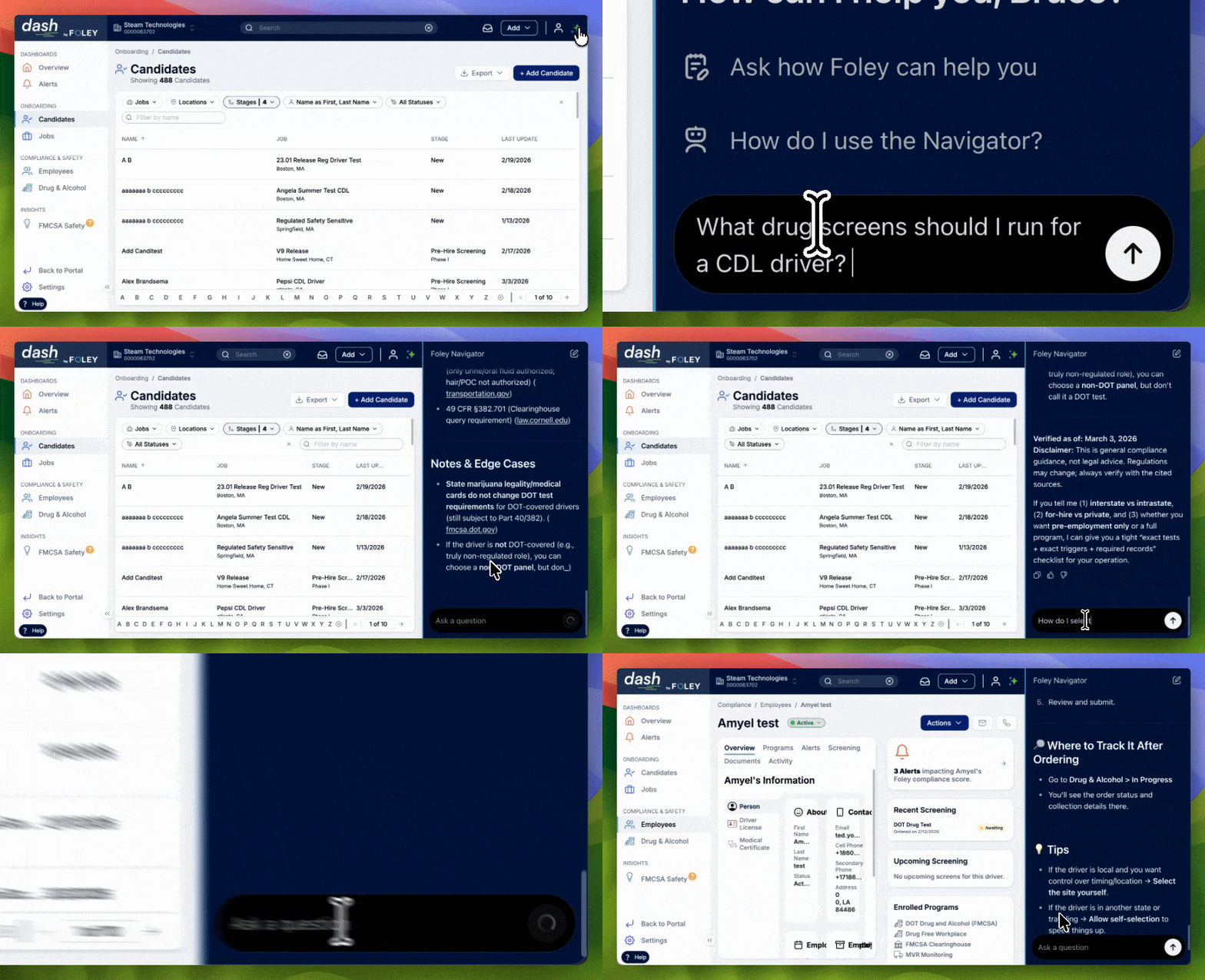
Foley's compliance programs cover the operational areas which drive your BASIC scores: drug and alcohol testing program management to keep your Controlled Substances BASIC clean through compliant random testing and Clearinghouse reporting, driver qualification file tracking to close Driver Fitness gaps, continuous MVR monitoring to catch Unsafe Driving risk before inspections do, and Clearinghouse query management so pre-employment and annual queries actually get completed. And with Dash, teams can pull key FMCSA safety data into one place to stay on top of inspections, violations, crashes, and BASIC trends before problems quietly build. Request a demo to see how Foley's Dash platform helps you stay on top of the compliance areas that are quietly driving your scores up.
Frequently asked questions
What is a CSA score?
A CSA (Compliance, Safety, Accountability) score is a percentile ranking assigned to motor carriers by FMCSA's Safety Measurement System (SMS). Carriers receive scores in 7 BASIC categories based on roadside inspection results, crash data, and investigation findings. Scores range from 0 to 100, higher scores indicate worse safety performance relative to peer carriers.
What CSA score triggers an FMCSA intervention?
Unsafe Driving, HOS Compliance, and Crash Indicator trigger FMCSA intervention at the 65th percentile. Vehicle Maintenance, Controlled Substances/Alcohol, and Driver Fitness trigger at the 80th percentile. Hazardous Materials triggers at the 60th percentile. Passenger carriers face lower thresholds starting at the 50th percentile.
How does a CSA score affect insurance rates?
92% of commercial trucking underwriters use CSA/SMS data in pricing models. Carriers with one BASIC above the intervention threshold face 10 to 15% surcharges. Two or more elevated BASICs trigger 20 to 30% increases or non-renewal. Carriers above the 90th percentile in Unsafe Driving or Crash Indicator may be declined by standard-market insurers.
How often are CSA scores updated?
FMCSA updates SMS data monthly. New inspection results, crash reports, and investigation findings are incorporated into the system each month, and percentile rankings are recalculated. Violations remain in the system for 24 months but are time-weighted, more recent violations carry greater weight.
Can you dispute or correct a CSA score?
Yes. FMCSA provides a DataQs challenge process for disputing inaccurate inspection or crash data. If an inspection report contains errors, wrong violation codes, misidentified carrier, or incorrect vehicle information, you can submit a Request for Data Review (RDR) through the DataQs system. Successful challenges remove the inaccurate data from your SMS profile.