









Guide to Fleet Compliance Management: Best Practices to Keep Your Drivers & Business Protected

What Fleet Compliance Management Really Means
Fleet compliance management is more than just checking boxes for the DOT. It’s the foundation that keeps your business safe, your vehicles on the road, and your reputation intact.
Fleet Compliance Regulations, DOT, and FMCSA Oversight
At its core, compliance management means ensuring your fleet and every driver meet FMCSA and DOT regulations. From driver qualification files and drug testing to maintenance logs, every record must be accurate, current, and readily available when an auditor requests it.
The Risk of Non-Compliance
The problem is that many fleets still rely on spreadsheets, paper files, and disconnected systems. This makes it easy for errors or missing documents to go unnoticed.
Over time, these small gaps can result in non-compliance, which can trigger audits, fines, or even operational downtime.
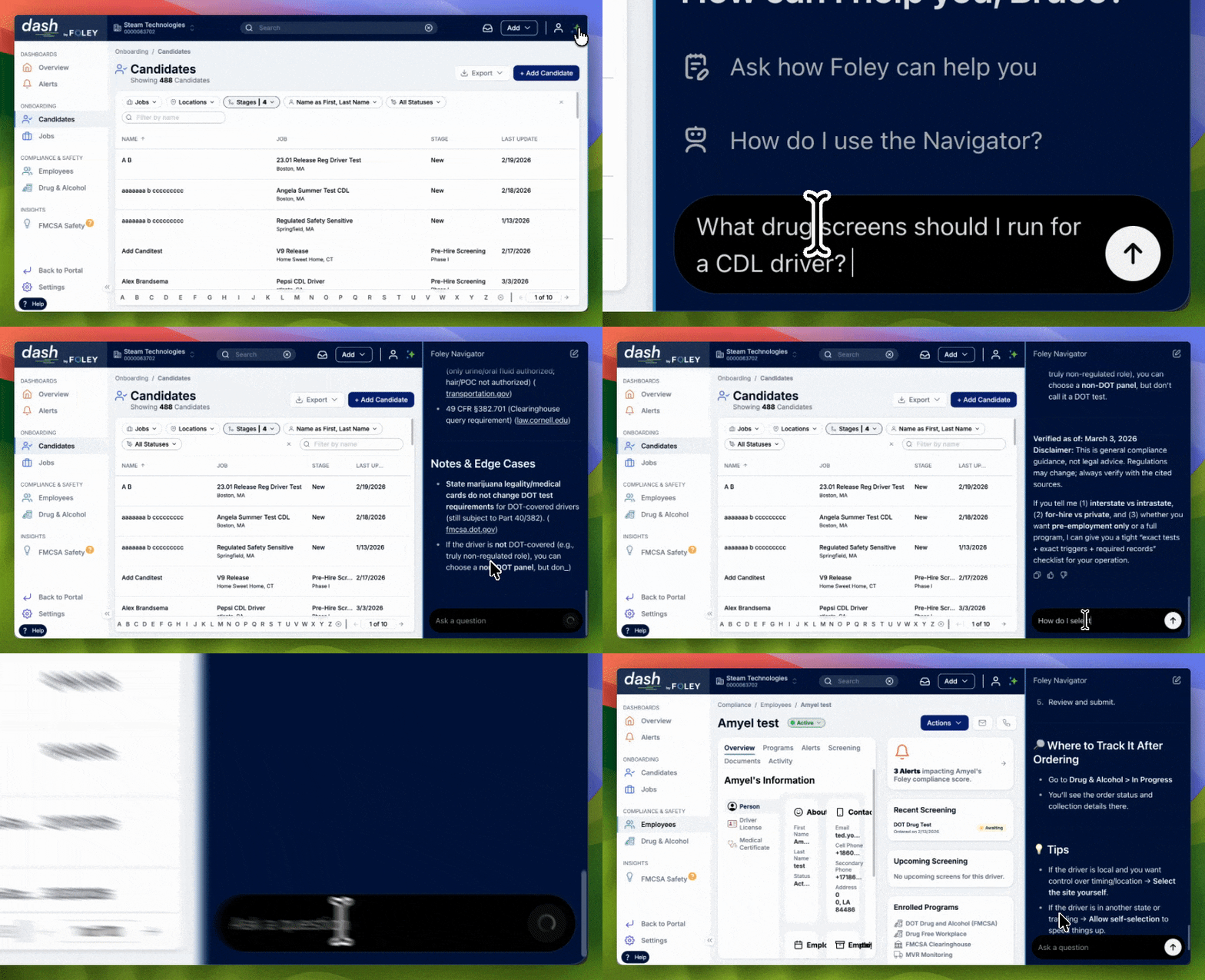
That’s where Foley’s platform steps in. It helps fleet managers stay aligned with FMCSA expectations by centralizing records and automating compliance workflows, reducing manual effort while improving accuracy and visibility.
Why Managing Compliance Requirements Matters More Than Ever
Regulations are tightening, and the margin for error is shrinking. A single expired medical card or missed inspection can lead to steep fines, lost revenue, or worse, downtime that eats into your profits.
Good compliance management does more than protect your fleet operations from penalties. It also:
-
Keeps your operation running safely and efficiently.
-
Reduces risk by catching problems early.
-
Supports growth by improving CSA scores and insurance outcomes.
When compliance runs smoothly, your entire operation benefits.
What Are Fleet Compliance Management Best Practices?
Effective fleet compliance management is all about building systems that prevent issues in the first place, rather than reacting to problems once they've already occurred. The most successful fleets take a proactive, structured approach that combines clear processes with consistent documentation and real-time visibility across drivers and vehicles.
Below are the core best practices every fleet should follow to stay compliant and operate more efficiently.
1. Centralize Driver Qualification Files (DQFs)
Driver Qualification Files are one of the most critical components of DOT compliance. Each file should include required documentation such as CDL copies, employment history, MVRs, medical certificates, and annual reviews.
The challenge for many fleets is fragmentation. Records are often scattered across paper files, spreadsheets, and multiple systems.
Best practice: Centralize all DQFs in a digital system that organizes records automatically, flags missing or expired documents, and tracks renewal timelines. This ensures files remain complete and audit-ready.
2. Move From Annual to Continuous MVR Monitoring
Annual MVR checks leave long gaps where driver risk can go undetected. A driver’s record can change at any time due to violations and suspensions or license updates.
Best practice: Use continuous MVR monitoring to receive real-time alerts when changes occur. This allows fleets to respond immediately and reduce exposure to violations, while maintaining ongoing visibility into driver risk.
3. Automate Drug and Alcohol Testing Programs
DOT drug and alcohol testing involves multiple ongoing requirements, including random testing pools, scheduling, result tracking, and FMCSA Clearinghouse compliance.
Best practice: Automate testing workflows to manage scheduling, maintain random pool integrity, track results, and store documentation in one centralized system. This reduces administrative workload while improving consistency and compliance accuracy.
4. Strengthen Medical Certificate Tracking
Medical certification is a frequent source of preventable violations. Because medical cards are tied directly to driver qualification and licensing data, expired certificates can quickly take drivers out of service.
Best practice: Use systems that track expiration dates, send proactive renewal reminders, and link medical certificates directly to driver records. This ensures full visibility into driver fitness and reduces compliance gaps.
5. Integrate Vehicle Maintenance and Inspection Compliance
Fleet compliance also depends on vehicle condition. Poor maintenance documentation can result in violations even when vehicles are mechanically sound.
Best practice: Implement structured maintenance management processes that ensure inspection schedules are followed, and maintenance records are consistently documented and audit-ready. This should include routine inspections, repair histories, and preventive maintenance tracking to keep vehicles safe and compliant.
6. Use Digital Checklists for Daily Compliance
Checklists are essential for turning compliance policies into daily action. Without them, critical steps like inspections or reporting can easily be missed.
Best practice: Use digital checklists for pre-trip and post-trip vehicle inspections (DVIR), safety checks, maintenance verification steps, and incident reporting. These workflows create consistent execution and generate time-stamped records that support accountability and audits.
7. Maintain Continuous Audit Readiness
Even well-managed fleets can fail audits if records are not consistently reviewed. Compliance relies on proving that data is accurate and up to date.
Best practice: Conduct regular internal audits to review DQFs, MVR records, drug and alcohol testing compliance, medical certificates, and maintenance logs. This helps identify gaps early and ensures you are always prepared for DOT inspections.
8. Build a Culture of Proactive Compliance
The most effective fleets treat compliance as an ongoing operational discipline rather than a reactive task.
Best practice: Use automation, reminders, and centralized dashboards to embed compliance into daily workflows. This reduces reliance on manual oversight and ensures nothing falls through the cracks.
9. Consolidate Compliance Into a Single System
Managing compliance across multiple tools increases complexity and the risk of missing critical updates.
Best practice: Consolidate driver, vehicle, testing, and reporting data into one unified platform. This creates a single source of truth, improves visibility, and simplifies oversight across the entire fleet.
The Core of Fleet Compliance Management System
DOT regulations impact every part of your operation, from your drivers to your equipment. Managing compliance well means keeping these key areas visible and organized.
1. Driver Qualification Files (DQFs)
Your DQFs are the backbone of compliance. Each must include an employment application, CDL copy, prior employer verifications, MVR, medical certificate, and annual reviews.
Why it matters: Missing or outdated files are one of the fastest ways to trigger a violation.
Foley’s advantage: Digital driver qualification files stay organized automatically. You’ll always know which files are complete, which need attention, and when renewals are due.
2. Continuous MVR Monitoring
Pulling annual MVRs used to be enough. Today, it’s not. A driver’s record can change overnight, putting your company at risk before you even know it.
The smarter approach: Continuous MVR monitoring provides real-time alerts whenever a driver’s record changes, giving you time to act before it becomes a problem.
Foley’s advantage: Real-time MVR monitoring gives you immediate visibility into license status or violations, helping you respond faster and stay compliant year-round.
3. Drug and Alcohol Testing
DOT-mandated drug and alcohol testing ensures safety-sensitive drivers are fit for duty. Between pre-employment, random, and post-accident testing, managing compliance manually is time-consuming and error-prone.
Foley’s advantage: Foley’s drug and alcohol testing program automates scheduling, random pool management, and result tracking. It also manages FMCSA Clearinghouse checks, so your compliance program runs smoothly from start to finish.
4. Medical Card Management
Medical cards are small but mighty when it comes to compliance requirements. An expired card can take a driver and your truck off the road instantly.
Foley’s advantage: Automated reminders ensure you never miss a renewal. Foley links each medical certificate directly to the driver’s MVR and DQF, giving you one connected view of compliance health.
5. Vehicle Maintenance and Inspection Records
Safe fleet management starts with safe vehicles. Preventive maintenance and accurate documentation are key to avoiding roadside violations.
Your responsibilities:
-
Maintain annual inspection certificates.
-
Conduct daily pre- and post-trip inspections.
-
Keep repair and maintenance logs up to date.
Foley’s advantage: Centralized recordkeeping keeps inspection and service data organized. You can access any document instantly, whether for an audit or an internal review.
The Cost of Maintaining Compliance Regulations Wrong
DOT fines can reach thousands of dollars per violation. But the financial cost is only part of the problem. Poor compliance can also lead to:
-
Increased insurance premiums.
-
Damaged CSA scores that affect business opportunities.
-
Operational downtime and driver frustration.
A single oversight in hours of service can ripple through your organization. The solution isn’t more people or paperwork—it’s better systems.
Achieve Proactive Compliance With Fleet Management Software
Manual compliance worked when fleets were smaller and regulations were simpler. Now, the pace of business demands automation.
Compliance software connects every part of your operation—drivers, vehicles, testing, and records—so you can see what’s complete and what needs attention at a glance, ensuring adherence to safety and compliance standards.
With Foley’s platform, you can:
-
Automate reminders for renewals and required updates.
-
Get real-time alerts for driver or vehicle changes.
-
Access organized, audit-ready documentation anytime.
-
Replace multiple vendors with one reliable solution.
The result is a compliance program that feels effortless, scalable, and built for modern fleets.
Real Fleets, Real Results
Foley’s platform isn’t theory—it’s working every day for fleet safety of every size.
-
Aero BridgeWorks saved over $40,000 per year by automating file management and compliance tasks.
-
Pet Food Experts grew its fleet while maintaining compliance visibility and cutting administrative work by 25 percent.
-
Stanley Tree Service streamlined compliance for both CDL and non-CDL drivers across multiple locations, reducing paperwork and improving oversight.
These success stories all point to one truth: automation turns compliance from a pain point into a performance advantage.
Choosing the Right Compliance Partner
When evaluating fleet compliance solutions, look for one that makes your life easier, not more complicated.
The right partner will:
-
Bring all driver, vehicle, and testing data together.
-
Provide automation and continuous monitoring.
-
Deliver clear dashboards and reporting.
-
Scale with your business growth.
Foley’s platform checks every box. It’s built specifically for regulated fleets that want confidence, not complexity.
Simplify Fleet Compliance with Foley
Managing compliance shouldn’t be a guessing game. Foley gives you everything you need to stay organized, proactive, and protected.
You’ll spend less time chasing files and more time focusing on growth and safety.
-
Automate compliance tracking and reminders.
-
Stay on top of every driver and vehicle record.
-
Protect your fleet’s safety, reputation, and bottom line.
Request a demo to see how Foley’s platform ensures compliance management for fleets of any size.
Related Articles
The Future of Fleet Management: Transitioning from Paper to Digital Processes
Simplifying Compliance for Commercial Fleet Managers: How Foley's Software Can Help
The Ultimate FMCSA & DOT Compliance Checklist
.webp)